Dear [firstname],
Over the past year or so, I have often told you about how dysfunctional Congress has become, this 119th session in particular. You have probably heard me explain how productive and important bills rarely make it to the House floor for a vote, and how Speaker Johnson has made a habit of sending us home early.
But you have also probably heard me promise, no matter how much of an uphill battle it is, to keep fighting for you and trying to get legitimate, meaningful work done. This week, that looked like proposing changes to get at the root of the dysfunction, making the best decision I could on a temporary federal budget, and working to make sure Medicare works well for those in our community. |
On Wednesday, I visited the House Rules Committee to share my proposals for making Congress more efficient and more accountable. Now, let me share them with you. |
Right now, when bills pass out of a committee, even if they have broad, bipartisan support, the full House of Representatives usually does not get a chance to vote on them. It’s entirely up to the Speaker to decide when, if ever, we get to vote on a bill, and Speaker Johnson has blocked most legislation from ever seeing a vote on the House floor. Clearly this is not how Congress should conduct the people’s business. |
|
So, I proposed a change: as soon as a bill passes out of committee with bipartisan support, a clock should start ticking. After 60 days, that bill automatically comes to a vote on the House floor. Under my proposal, we would pass more useful bills, clearly and definitively reject more partisan or bad bills, and deliver more tangible support to the communities we serve. |
I also want to make sure that Members of Congress can maximize our time at home and our time in Washington, instead of traveling more days than we’re working. Traveling to and from our district is not too onerous for me, of course, since I can drive or take the train. But most Members of Congress have to take weekly flights to and from the Capitol, and all of us lose |
|
out on that time. On top of that, Congress’ calendar stacks committee meetings and hearings to overlap with each other and with votes. That means most Members usually have to duck in and out of meetings to run to and from votes, further scrambling our time and our focus.
The current calendar is simply not conducive to getting things done. I proposed a restructure of Congress’ calendar, giving us longer district and legislative work periods (meaning fewer travel days) and designated, protected committee time. These changes would allow us to spend more time learning about and hashing out important policy in committee meetings while also showing up to cast our votes without interruption. |
Finally, as a member of the House Armed Services and Intelligence Committees, I care deeply about making sure Congress keeps classified information classified. You might be surprised to learn that despite having access to some of the most restrictive and secret information our government maintains, Members of Congress and our staffs receive no formal training or guidance about how to safeguard this material. |
|
Those of us who are veterans, or who have held a security clearance before coming to Congress, are the only ones with an informed understanding of how to handle classified materials, because we are the only ones who have had training.
My proposal is to bring Congress in line with the rest of the government: required training on classifications, security, and counter-intelligence awareness. Accessing certain classified information helps us make the right foreign policy designs to protect our troops and our communities. My plan to add proper training ensures we can make these decisions without putting our national security at risk. |
You may remember that Speaker Johnson tried to pass a Continuing Resolution (CR) to fund the government in July, and I voted against it because we still had months before the federal government’s budget would expire. I wanted to use that time to broker a better deal. Now, I can say that holding out was worth it.
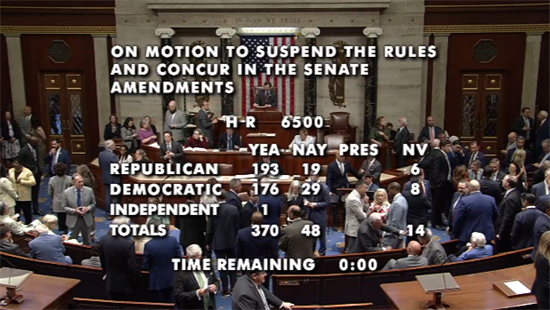
This week, I voted to pass a far better CR than the one offered in two months ago. This CR closes a loophole that would have allowed the Trump Administration to funnel more money to ICE and CBP, blocks the White House’s attempt to restrict federal grant funding based on recipients’ political views, and keeps Congressional Republicans from further slashing funding for the programs our community relies on. |
This deal extends funding through December 11, 2026. It’s important to note that even this is not Congress functioning as it should. A Continuing Resolution is a last resort to prevent a government shutdown, not how our government is supposed to be funded. So, between now and December, I will keep doing everything I can to negotiate that permanent budget that delivers for us in Chester and Berks Counties, just as I have done to get us to this point. |
More than 150,000 people in our community rely on Medicare, and with the 2027 open enrollment period about six weeks away, many of you might have questions about your plan options. My team and I are here to help. |
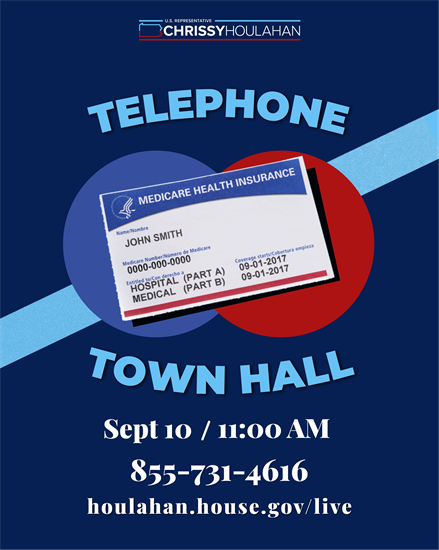
I’m hosting my fourth annual Medicare Telephone Town Hall on Thursday, September 10 at 11:00 am, where local Medicare experts from the Social Security Administration (SSA) and Centers for Medicare and Medicaid Services (CMS) will offer information and advice. To join us, all you have to do is call (855) 731-4616. If you can't call into the town hall live, you can also listen to a recording on my website after the fact.
We host a town hall like this each year because you deserve to be informed about your healthcare choices to make the best possible decisions, and I hope this resource makes the process a little easier for you. |
|
Speaking of Medicare, I have heard from hundreds of our neighbors over the past few weeks with concerns about a Medicare rule change that would make it harder to get dermatology care. What most people haven’t mentioned – and may not know – is that this rule change could actually impact so much more than just dermatology. Let me take this opportunity to break down the full impact of this proposed change, when it could take effect, and what you can do about it.
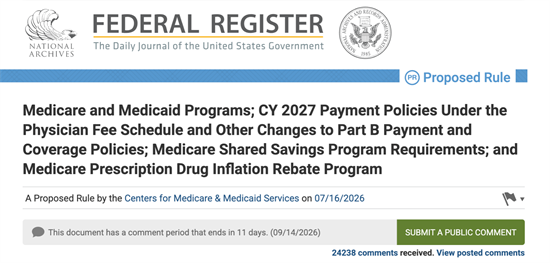
Every year, CMS releases its Physician Fee Schedule, which determines how Medicare and Medicaid will cover healthcare services in the coming year. In the proposed Physician Fee Schedule for 2027, Medicare will no longer reimburse medical providers enough to cover some medically necessary treatments within the same visit as a consultation or screening. This means more trips to the doctor for the same care, not just at your dermatologist, but from other doctors and specialists, too. |
But there is some good news: the 2027 Physician Fee Schedule is not yet approved. You have until Monday, September 14th to raise your concerns directly to CMS and urge them to reconsider this rule change by submitting a comment here. |
On this issue and beyond, I’m always in your corner, fighting to make sure you get the support you need and the care you deserve.
Thank you, as always, for the honor of representing you. |
Chrissy Houlahan U.S. Member of Congress
Were you forwarded this email? Sign up for my newsletter here.
Please share: if you find this newsletter valuable or interesting, please share it with friends and family and ask them to subscribe too.
Please note that replying to this email will not direct your message to the right place. To contact the Office of Representative Houlahan, please click here. |
|