Dear [firstname],
You may have heard that the House of Representatives voted to pass the SAVE America Act a few weeks ago, and now the Senate may vote on it in the coming days.
I have seen plenty of misinformation about this bill, some of it intentionally confusing. It is important to say up front that there is no evidence at all of any widespread voter fraud in our elections. Below, I break down what the SAVE America Act does and doesn’t do, how likely it is to become law, and how it may impact you. |
The SAVE America Act makes immediate changes to election law, requiring all Americans to show specific proof of citizenship documents. This will be required both to register to vote and then to actually vote in an election.
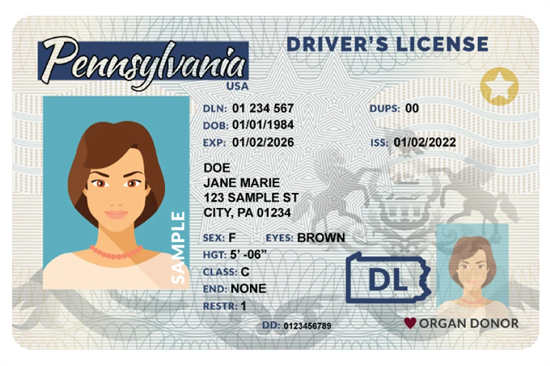
This means that to vote, you would need a passport (which only 51% of Americans have), a driver’s license or state ID that lists your citizenship status (which is only available in five states, and not Pennsylvania), or a driver’s license paired with a birth certificate of the same name (which is a problem for the 80% of women who change their last name when they get married). If you vote by mail, you would need to include a photocopy of these documents. Every time you vote. |
Making sure we have at least one of these documents isn’t an insurmountable administrative burden for most of us, but it is also not cost-free. Doing it in time for this November election certainly is a burden. And, unfortunately, that’s what the President is pushing for.
Protecting our elections means making sure non-citizens cannot vote (which is already the law) and making sure that each and every eligible U.S. citizen can. Both are critical to preserving our democracy – this is how we keep our government working for us. That’s why, given the burdens it puts on American citizens trying to cast their ballots, I voted NO on the SAVE America Act in the House on February 11. |
Today, voter registration is handled by the states. Each state maintains its voter rolls and verifies that everyone who registers is eligible to vote.
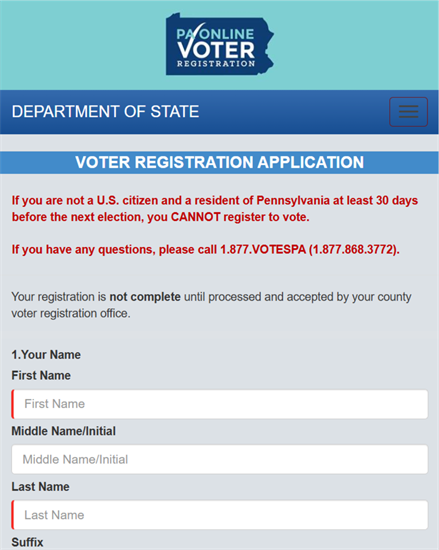
Most Americans can register online, by mail, or in person at an election office or DMV. When someone registers, they must provide identifying information, like a driver’s license number, state ID number, or the last four digits of their Social Security number.
Election officials then verify this information against government databases before approving a voter’s registration. That includes the Department of Homeland Security’s citizenship database, meaning voters’ citizenship is already vetted and confirmed. |
|
This verification is already part of the voter registration process in every state. With that context in mind, let’s take a closer look at some of the claims being made about the SAVE America Act. |
My colleague, PA Senator Dave McCormick, said recently, “We ask Americans to show an ID to buy a beer, board a plane, donate blood, apply for benefits, or even get married! But when it comes to electing the leaders who decide the direction of our country...no ID is required. That is absurd!”
And I agree. I agree that only U.S. citizens should be able to vote in U.S. elections, and I agree that requiring voters to show an ID to prove who they are is reasonable. If only that’s all there was to this bill. |
Myth: “The SAVE America Act lets Americans easily use their driver’s licenses or REAL IDs to register to vote or to vote.”
Reality: The SAVE America Act only allows driver’s licenses/REAL IDs that show citizenship status – which only five U.S. states offer. Unless you live in Michigan, Minnesota, New York, Vermont, or Washington, your driver’s license/REAL ID won’t be enough to vote or register to |
|
vote. Plus, even in those five states an enhanced ID (the one that shows proof of citizenship) is not required. Many citizens don’t have one because they range from $25-30 more than a traditional drivers license/or REAL ID.
Myth: “We need the SAVE America Act to prevent voter fraud and stop undocumented immigrants from voting in our elections.”
Reality: Fortunately, state audits and extensive studies show that voter fraud is incredibly rare. For example, out of Michigan’s 5.7 million voters in 2024, 15 people voted when they were not eligible, and they are now being prosecuted. Georgia’s audit of 8.2 million voters found nine noncitizens who voted, and they too are being prosecuted. In Utah, an audit of their two million voter files turned up zero cases of fraud. |
Myth: “The SAVE America Act was rewritten to fix the elements that made it harder for married women to vote."
Reality: Sort of. It’s like putting out the flames on the hoops we still have to jump through. What was an insurmountable obstacle is now just ridiculously difficult. The latest version of the bill provides a process (finding a notary and getting an affidavit) to reconcile maiden and married names. |
|
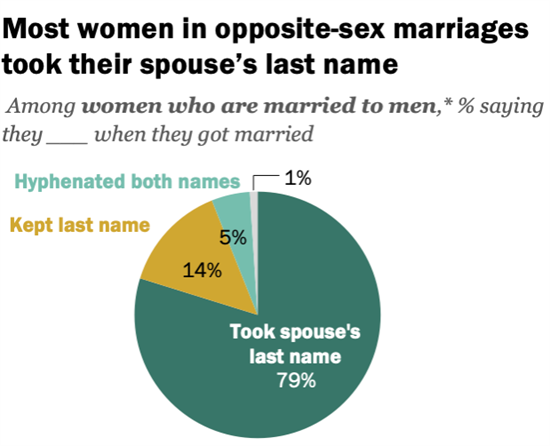
But this still means many women would have to go through complicated processes and provide extra legal documentation just to cast their ballots. A survey from Pew Research Center found that 79 percent of American women have taken their spouse’s name. When women who have hyphenated their surname are also included, it’s 84 percent of American women. That’s a large portion of our electorate who would be impacted (and possibly disenfranchised) by the complicated and careless provisions within the SAVE America Act.
Myth: “The SAVE America Act was rewritten to fix the elements that made it harder for military servicemembers to vote.”
Reality: Again, it’s like we put out the fire, but the ridiculous and unnecessary hoops are still there. In the original bill, servicemembers stationed overseas had to return to the United States to register to vote in-person. In the latest version, servicemembers overseas can register to vote and then actually vote as they do now. But servicemembers stationed within the U.S. would need to travel home to register to vote in-person.
Imagine being a married woman serving in the military and not yet registered to vote. Chances are, you’re not going to. |
In February, the bill passed in the House of Representatives with all Republicans voting YES and almost all Democrats voting NO. Now, it needs 60 votes to pass in the Senate and would then go to President Trump for his signature.
We expect the Senate to vote next week on the SAVE America Act. As of now, it does not have enough votes to pass. Still, I will be watching the Senate closely and will continue urging my colleagues not to support this irresponsible legislation. |
Constituents have been reaching out to my office to ask how they should prepare, in case the Senate does pass the SAVE America Act. If the bill becomes law, here’s what voting would look like for you. |
If you are already registered to vote, you would need to take a form of documentary proof of citizenship (DPOC) that includes your photo and current legal name to your polling location or, if voting by mail, include a photocopy of this documentation with your ballot.
If you have a U.S. passport that matches your current legal name, you can use that to vote. If not, here are your options: - If you have a photo ID and a U.S. birth certificate that matches your current legal name, you could use these two documents together to vote.
- If the name on your birth certificate does not match your current legal name, you must submit additional documentation that links your names or sign an affidavit confirming that the name on citizenship documents is a previous name.
- If you are a military servicemember, you could use your military ID and a U.S. birth certificate to vote.
- However, if you are a military servicemember without a U.S. birth certificate, this option is not available to you.
- You can get a passport, which costs between $60 and $130. More information on applying for passports is available here.
- People who have REAL IDs that list their citizenship status could use that to vote. However, only five states list citizenship on REAL IDs, and Pennsylvania is not one of them, meaning this is not an option for PA residents.
To register to vote under the SAVE America Act, you would also need to present one of these options in-person. This includes registering for the first time, updating your registration when you move, and making changes like your name or party affiliation.
If you’re a military servicemember stationed overseas, you have some exemptions: - You could still vote by mail without needing to include photos of any identifying documents.
- You would not need to present documentary proof of citizenship in-person to register to vote or change your registration.
However, if you’re stationed in the continental U.S., whether close to home or not, no exemptions apply. You would still be required to register to vote in-person and to present valid proof of citizenship to vote. |
Here’s the bottom line: I support voter ID requirements at the polls. I have always supported voter ID requirements at the polls. But this bill is a messy, irresponsible piece of legislation that would end up forcing some Americans to pay to vote and discourage others from voting at all.
That is not what strong, fair, and legal elections look like. It’s not what democracy looks like. And it doesn’t have to be what our law looks like. We can do better than the SAVE America Act, and I will keep working to make that happen. |
|
As your representative in Congress, my vote is always to protect yours. |
Chrissy Houlahan U.S. Member of Congress
Were you forwarded this email? Sign up for my newsletter here.
Please share: if you find this newsletter valuable or interesting, please share it with friends and family and ask them to subscribe too.
Please note that replying to this email will not direct your message to the right place. To contact the Office of Representative Houlahan, please click here. |
|